
An inquiry into the region’s priorities took place in early 2025
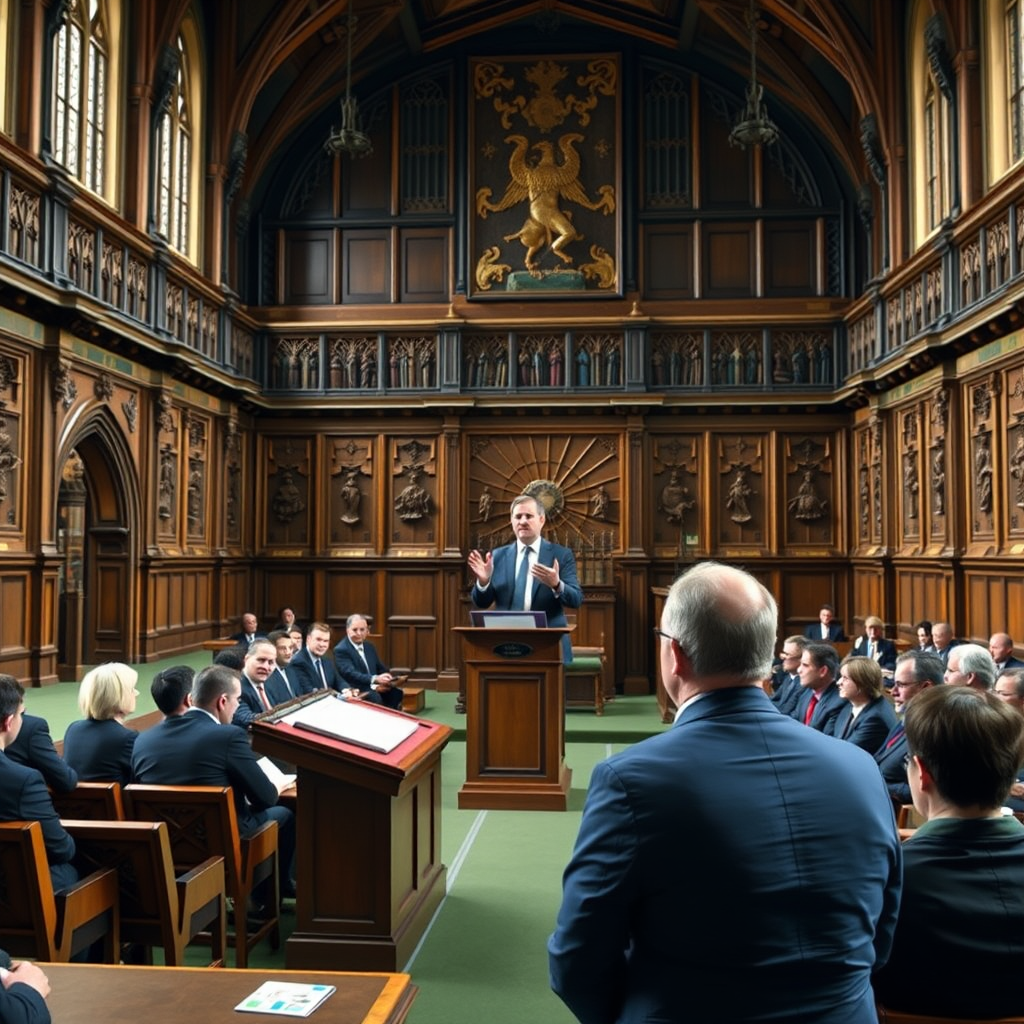
Rushcliffe MP James Naish outlined the priorities at a Westminster Hall debate on Tuesday, March 17(Image: parliament.tv)
Rushcliffe MP James Naish has outlined the five most important things the East Midlands needs after years of underfunding.
An inquiry into the East Midlands’ “regional priorities” in 2025, found five “primary conclusions” on how the region could be improved.
Labour politician Naish presented the results of the inquiry – commissioned by the East Midlands All-Party Parliamentary Group (APPG) – to a Westminster Hall debate on Tuesday, March 17, which was centred around “productivity and growth in the East Midlands”.
The results were originally published in May before the government’s Comprehensive Spending Review in June, where Chancellor Rachel Reeves set out how money would split across the country until 2028-2029.
But while the East Midlands was boosted by a number of announcements on that day, such as its £2bn transport settlement, the region still hasn’t had many of the APPG inquiry’s recommendations executed or put into practice.
Reiterating the five recommendations before last Tuesday’s debate, Mr Naish argued that the findings of the inquiry and the recommendations were “fair and grounded”.
The first recommendation was that the government needs to actively rebalance public investment, especially in transport, so it better reflects housing and employment growth, potential and delivery.
Mr Naish said: “I wholeheartedly welcome that the treasury’s greenbook is being updated, but this in itself won’t correct the historic imbalances which must be addressed if we want places like the East Midlands to maximise their potential. There is a genuine need for overcorrection.”
The second recommendation was for a pilot of “enhanced local employment hubs” for skills, careers and business support, in a way that “genuinely reflects local labour markets”.
Mr Naish said: “One of the strongest themes in the evidence received by the inquiry was frustration about the fragmentation of the current skills system. There are too many pots of money, too many separate agencies, too much inconsistency and too little flexibility, all of which hampers growth and productivity.”
The third recommendation was to expand women’s health hubs across the region, given the “relatively poor” life expectancy of women in too many parts of the East Midlands.
Mr Naish said: “All genders and all age groups must contribute to closing the East Midlands’ growth and productivity gaps and targeted interventions will be required to realise this.”
The fourth recommendation was that the East Midlands play a more central role in the country’s transition to net-zero, considering its “historic role” in powering millions of homes and businesses across the UK.
Mr Naish said: “Linked to this was the call made by over 30 MPs for finally electrifying the Midland Mainline to Sheffield, which has sadly become a byword in our region for slow, uneven, stop-start infrastructure investment into a really important part of the country.”
Finally, it was suggested that the way flood resilience funding is targeted should be reformed so that it “reflects social need and repeated risk rather than underlying land values”.
He said: “Flooding can sometimes seem like a separate conversation to growth and productivity, but in the East Midlands, it is very much part of the same conversation.
“If we want growth, if we want to boost investor confidence, if we want housing delivery and economic resilience, then flood adaptation and mitigation are not optional extras.
“They must be seen as enablers for economic growth, as well as for protecting food and energy security, which our region provides in abundance, especially in Nottinghamshire and Lincolnshire.”
Mr Naish added that the East Midlands has the greatest share of properties at risk of flooding from rivers or the sea of any English region.
He added: “These recommendations show that the East Midlands isn’t looking for a silver bullet. Indeed there isn’t one. What the East Midlands needs is a serious joined-up approach to growth, because infrastructure, skills, health, clean energy and climate resilience are not separate conversations.
“They all need serious consideration to determine whether our region can fulfil its potential in powering the national economy.”
Parliamentary under-secretary of state for housing Miatta Fahnbulleh heard from a number of MPs during the debate, from Nottinghamshire, Derbyshire, Lincolnshire and Leicestershire.
She said that the government is “absolutely determined” to “put right” historic imbalances of investment.