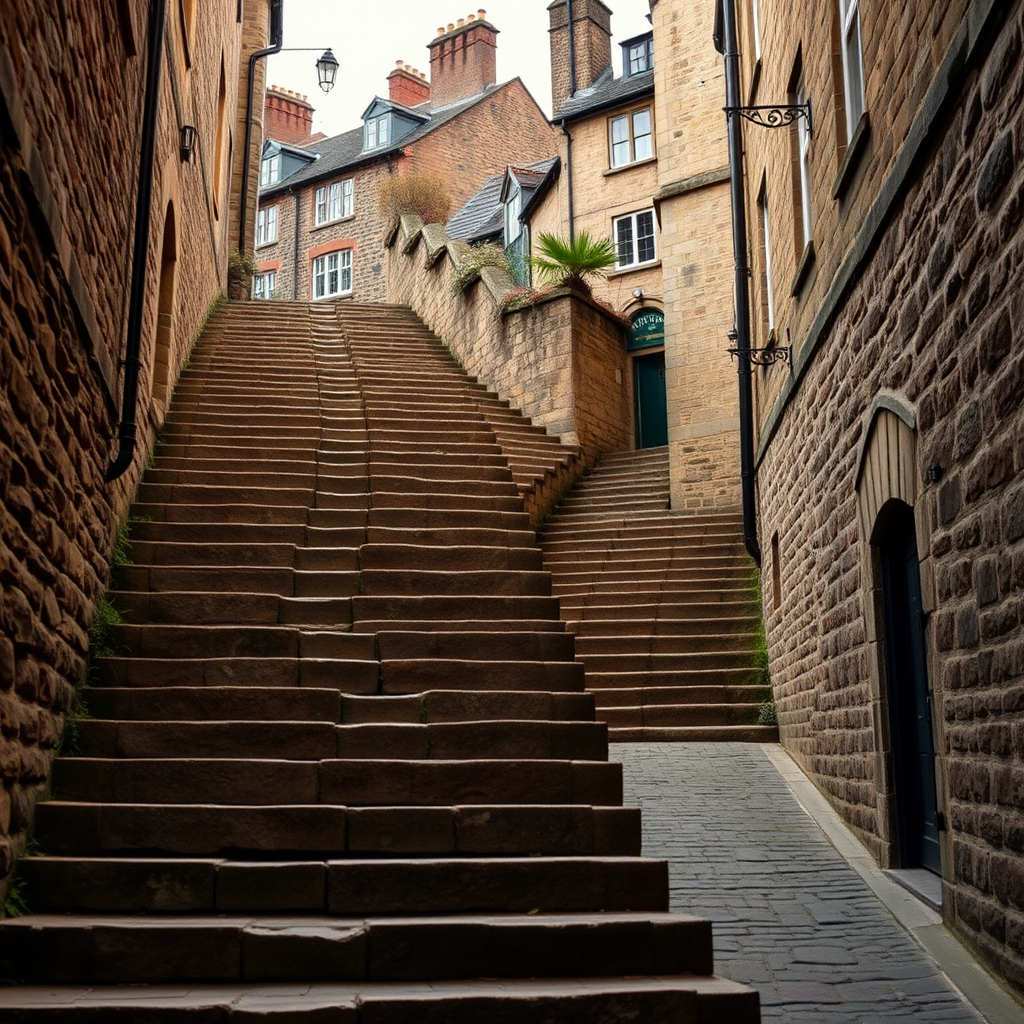
A historic pathway in Nottingham is set to welcome visitors once more after nearly 100 years of being inaccessible. The Long Stairs, situated near High Pavement in the Lace Market area, have undergone complete restoration by dedicated volunteers and will soon reopen to the public. These steps date back over half a millennium and represent the sole surviving original route connecting the city’s lower district with its upper section, as all comparable access points have long since disappeared. Public access was cut off in 1933, remaining closed for 93 years, with the closure prompted by safety concerns and the location’s reputation for serious criminal activity. Janine Tanner has served as the unpaid steward of the Long Stairs since 2018, working tirelessly to secure funding for restoration efforts after the site had become overgrown with vegetation, filled with trash, and cluttered with debris. Construction commenced in May 2025 and wrapped up in December that same year. The Long Stairs are scheduled to reopen on Sunday, April 19, at 2pm. Ms Tanner expressed her delight at witnessing the project’s completion, noting that while the wait has been lengthy, the stairs now appear magnificent. She emphasized that the restoration enables people to finally experience this historic route, describing it as among Nottingham’s most ancient pathways and the unique surviving connection between the higher city and the lower marshes. She stated the site required attention and recognition, pointing out that much of the city’s historical fabric has vanished while this location endures after more than five hundred years. She extended heartfelt gratitude to all who supported the maintenance and restoration efforts. However, the location will not function as a public passage because the lower portion remains unrestored and the stairs terminate at gardens occupying the structure’s base. Instead, the Long Stairs will operate as an entertainment and heritage venue, with Ms Tanner planning to accommodate local musical groups, school excursions, charitable events, and poetry evenings. Funding for the restoration came entirely from charitable contributions, totaling approximately £20,000. The restoration work stabilized the upper staircases, which had become unstable. Safety railings were fitted, and the low wall bordering the steps was raised to shield visitors from the 40-foot drop alongside the structure.
This is a digital representation, not a photograph.