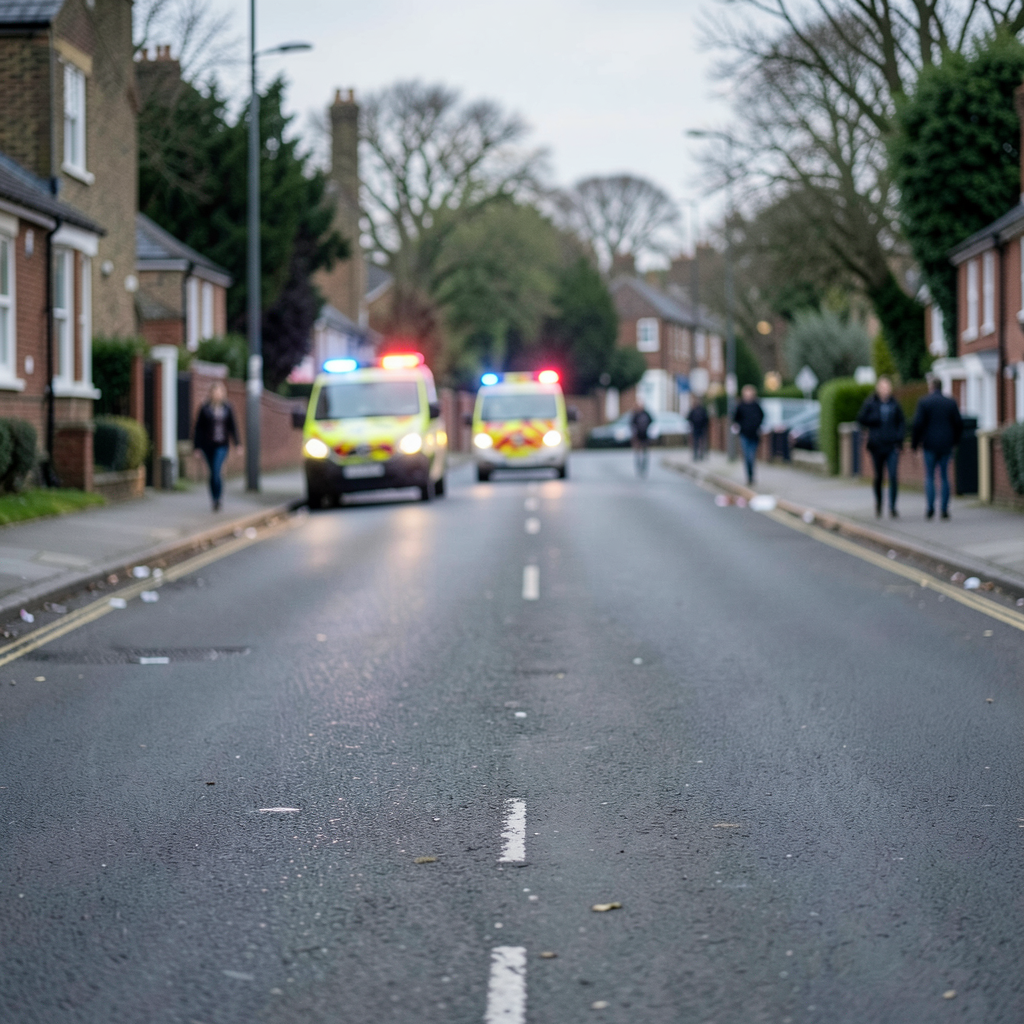

A mobile surveillance vehicle equipped with facial scanning capabilities will capture images of everyone in the vicinity, though the captured data will be wiped within moments.
The facial recognition system could potentially be rolled out throughout the Nottinghamshire area.
Residents throughout Nottinghamshire are being assured there is no cause for concern regarding the facial recognition system being installed in a police surveillance van aimed at identifying criminal elements.
Nottinghamshire Police indicated the technology would be mounted on a force vehicle both to locate individuals of interest and to assist in protecting those who may be at risk.
The force previously introduced a surveillance van in 2025 featuring omnidirectional cameras capable of detecting faces from distances exceeding 1,500 feet.
The new system represents an advancement by employing those cameras to cross-reference faces against a database of individuals flagged for involvement in serious offences.
Police provided an illustration of potential deployment, such as observing whether any individual is contravening a prohibition order preventing them from accessing specific zones, including the urban centre.
In Nottingham’s city centre, members of the public expressed approval for the initiative. Ann Sutherland, 61, observed that numerous reports in local publications indicated police were still seeking suspects months after incidents occurred, and she questioned the resources devoted to such efforts.
She suggested that effective facial recognition could significantly reduce costs for the force, enabling officers to concentrate on other criminal activity.
Sutherland noted that a current obstacle involves offenders wearing facial coverings, where only eye visibility remains, which naturally limits effectiveness.
She also pointed out that without an existing database of all residents, identification would only be possible for those with prior offences, meaning the system would need to accompany identity documentation, which she described as a separate complex matter.
She expressed support provided usage remains impartial and focused on genuine criminal activity rather than minor youthful infractions.
Nottinghamshire Police confirmed the system would notify officers upon detecting a match with someone on their database, at which point officers would make contact to verify the identification and determine whether additional steps were warranted.
The facial scanning equipment will capture all faces in the vicinity and contrast them against the stored images on the database.
Authorities stated that individuals wearing masks or other face coverings remain identifiable.
Advance notice will always be provided to the community before the van is positioned in any location, and all facial scans will be purged within seconds, the force emphasised.
Ian Ellingworth, 68, from Nottingham, offered his perspective that those with nothing to conceal need not be troubled by surveillance of their whereabouts.
Daisy Overton, 21, from Mansfield, expressed conditional support, stating that in principle any measure facilitating the apprehension of criminals seemed worthwhile.
She compared it to other security measures, suggesting those engaged in wrongdoing naturally have grounds for concern.
She personally had no objections, viewing facial data usage as equivalent to in-store CCTV systems.
She concluded that individuals abiding by the law had nothing to fear.
Detective Superintendent Will Henley, the project lead, explained that law-abiding citizens entering the city or county had no cause for concern. He emphasised the system was not intended to monitor people’s general movements.
The technology’s purpose, he clarified, was to identify individuals already flagged within the database for criminal offences or requiring protective intervention, such as locating missing persons.
The system would consistently be applied with appropriate restraint relative to its deployment location.
He stressed this would not serve as a replacement for police officers. Instead, the technology would support officers in maximising opportunities to identify those inflicting the greatest harm on local communities.