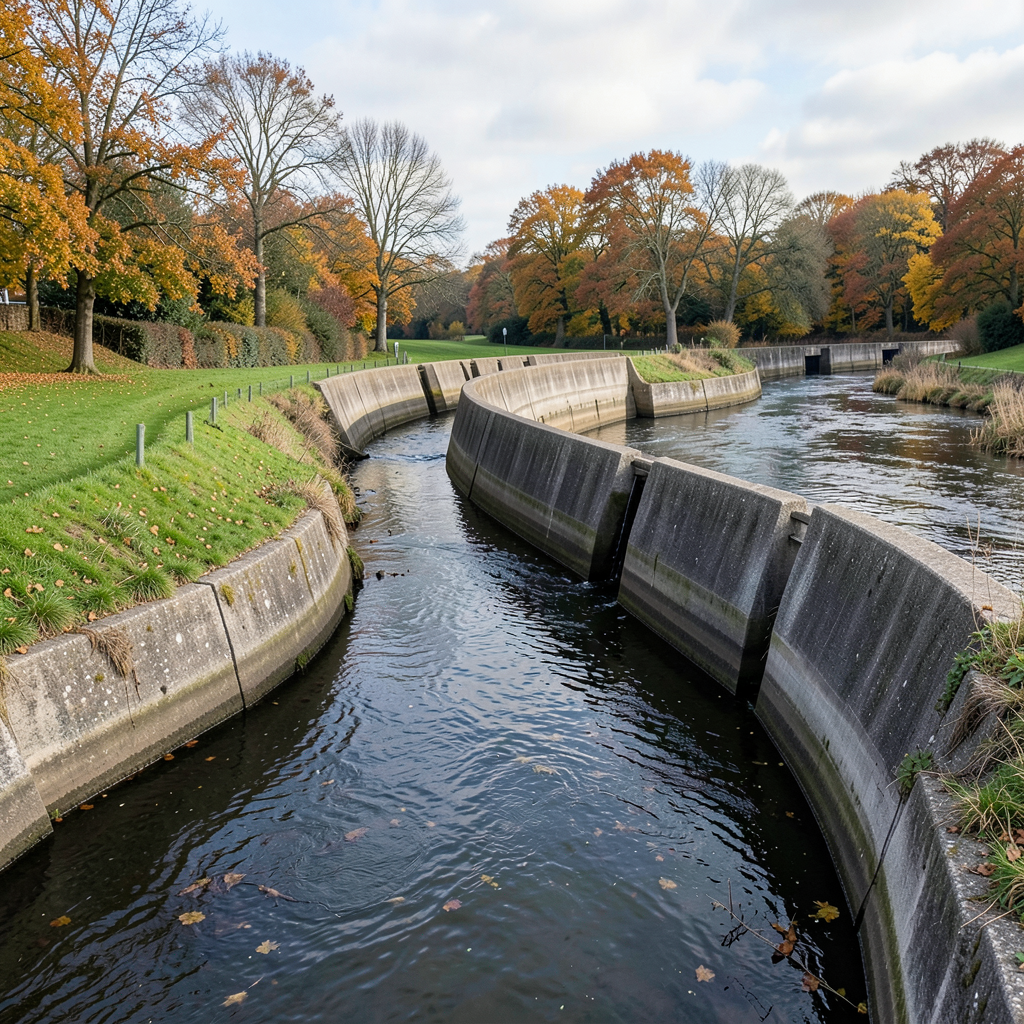

A massive engineering project in a Nottingham park has drawn attention for both its scale and the mystery surrounding its effectiveness.
The structure at Colwick Country Park is a 200-metre-long channel, approximately six metres in depth and width, which curves around the substantial Holme Sluices flood control structure on the River Trent.
This canal-like excavation represents the largest and most costly fish passage in Britain, constructed specifically to enable species such as eels, salmon, and trout to bypass the 1950s-era barrier obstructing their natural movement.
The facility was officially opened in late 2024, though several months behind its original schedule, after an expenditure of £12 million and a construction period spanning two years.
However, the Nottingham Post can now disclose that the Environment Agency, which previously promoted the project using language comparing it to a motorway for fish, has not confirmed whether any aquatic life has actually utilised the passage.
Information obtained through Freedom of Information legislation reveals that the Government body has conducted no surveillance of what travels through the structure, despite it having been operational for over two years.
While the agency noted that fisheries staff discovered species including pike, perch, roach, and bream following the emptying of the passage for maintenance purposes, ecologist Dr Scott McKenzie stated that determining whether any river inhabitants had genuinely navigated through remained impossible.
The expert, who leads the rivers and nature-based solutions division at the Trent Rivers Trust, explained that observation was crucial for assessing whether the investment had proven worthwhile. He emphasised the desire to understand the project’s effectiveness.
Regarding the species discovered, Dr McKenzie expressed confidence that these fish were simply inhabiting the space rather than transiting through, drawn to the expanse because it contained water rather than being motivated to continue their journey.
The specialist indicated that evidence of salmon, sea trout, and lamprey would have been more compelling, as these species actively seek particular habitats.
The agency cited the unprecedented discovery of a young salmon in Bottle Brook, Derbyshire as encouraging proof that aquatic life was accessing the passage, though officials conceded they could not demonstrate that the adult fish had travelled through the Colwick structure.
Dr McKenzie outlined that comprehensive observation of the passage would demonstrate value for money while also identifying other river sections requiring attention for wildlife conservation.
Although reluctant to dismiss the Colwick project as wasteful, the specialist noted that additional funding was necessary for the River Trent to address the multiple obstacles preventing fish movement on this third-largest river in the county.
He compared the situation to preparing a house’s foundations but then failing to construct the dwelling above, suggesting increased fish populations at Colwick would naturally encourage greater usage.
The Environment Agency, obligated by law to construct the fish passage as part of major renovations to the Holme Sluices barrier, announced intentions to begin monitoring during autumn 2026 and spring 2027.
An agency representative stated that salmon and other migratory species faced serious population decline, making intervention to enable their movement and reproduction critical. The Colwick passage was described as meticulously planned, building upon successful designs implemented in other parts of England and Europe. Observation was scheduled to commence during important migration periods this autumn, with various techniques for assessing fish movement being evaluated.
Before selecting the final proposal, the agency assessed 40 alternatives and projected £18 million in ecological advantages from the chosen design.
The fish passage operates through a network of narrow openings where water flows, guiding aquatic life through 20 successive chambers from one side of the barrier to the other.
During construction, a viewing platform was established, though this only offers an overhead perspective of the water and remains partially blocked by fencing.
Dr McKenzie suggested that visual confirmation of any fish from this vantage point seemed improbable, describing the arrangement as an opportunity squandered.
Alternative projects, including the Diglis Fish Pass on the River Severn, incorporated transparent panels allowing spectators to observe underwater activity, with visitors able to witness fish and otters swimming past.
He observed that Colwick failed to capitalise on the chance to install such a window, noting that the modest additional expense would have significantly engaged the public and clarified the passage’s purpose.
People fail to appreciate the River Trent because they remain unaware of its inhabitants, and this represented a chance to change that perception.