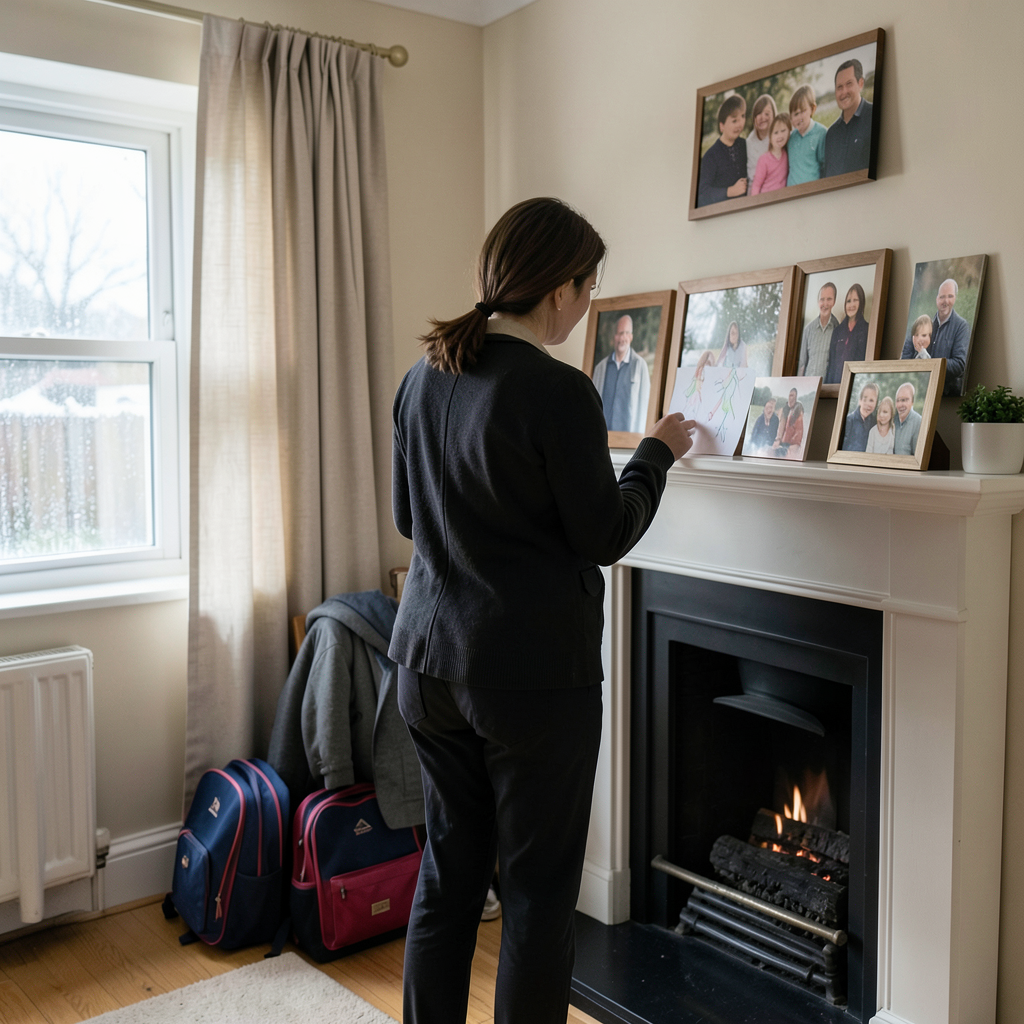

A woman from Mansfield whose husband died suddenly is calling on the Government to overhaul the bereavement support payment system.
Cat Orton, a mother of two, became a single parent after her husband Jon passed away unexpectedly from a cardiac arrest at age 43 in October 2024.
While dealing with her own grief and caring for her children, James and Lily, who were 15 and 12 respectively at the time, she found herself having to go back to work to maintain the family home.
The 45-year-old explained that she constantly struggles to balance earning enough to replace Jon’s income with being available for her children during their most difficult moments. She works extremely long hours and frequently feels exhausted, which sometimes makes her irritable. She wishes she could offer them far more, but much of her effort goes towards the ongoing financial struggle to keep the family stable.
She is now involved with Widows Fight UK, a substantial collective of widows advocating for immediate changes to the bereavement support payment framework.
At present, those who have lost a spouse must submit their claim within just three months of the death, and neither funeral directors nor coroners are required to advise families about this scheme. Payments are made for 18 months following a partner’s death. Prior to 2017, widowed parents with children under 18 continued receiving payments until their youngest completed full-time education.
Cat, who works as a creative director, says that although the financial support ends after 18 months, the emotional journey continues indefinitely, with children still requiring the same level of care now that they are 17 and 14 years old.
She noted that children’s mourning does not follow a straight path, and what troubled them at ages 12 and 15 differs from their current concerns. Now James requires his father to guide him through shaving, while Lily needs her father to teach her to drive.
She is convinced that implementing these changes would significantly benefit grieving families, enabling parents to spend more time with their children and ease the financial strain that now falls entirely on the widowed parent.
Jon was responsible for laundry, household waste collection, transporting the children to school on certain days, and contributed a second income through employment. When the payments cease, the obligation to manage all these responsibilities alone remains, she continued.
Cat joined fellow campaigners from Widows Fight UK to present a petition bearing more than 100,000 signatures at 10 Downing Street, urging the Government to implement several key changes. These include making it compulsory for widows to be informed of their entitlement to claim, extending the three-month deadline for submissions, increasing the benefit amount which has remained unchanged since modifications were made in April 2017, and prolonging payments until the youngest child completes full-time education.
Cat described standing outside Downing Street as the most extraordinary experience of her existence, while emphasising that all those present were deeply conscious that they would not have gathered there had their husbands not died.
Alongside the petition, they also delivered a collection of letters from widows, widowers, and grieving children from throughout the United Kingdom, describing how bereavement has impacted their lives.
A Department for Work and Pensions representative stated that losing someone close is profoundly difficult and acknowledged the significant financial consequences for families. The Bereavement Support Payment offers temporary financial assistance, with increased amounts provided for those with children. Additional support with daily living expenses may be accessible through benefits including Universal Credit, which delivers tailored assistance based on financial circumstances to those most in need.