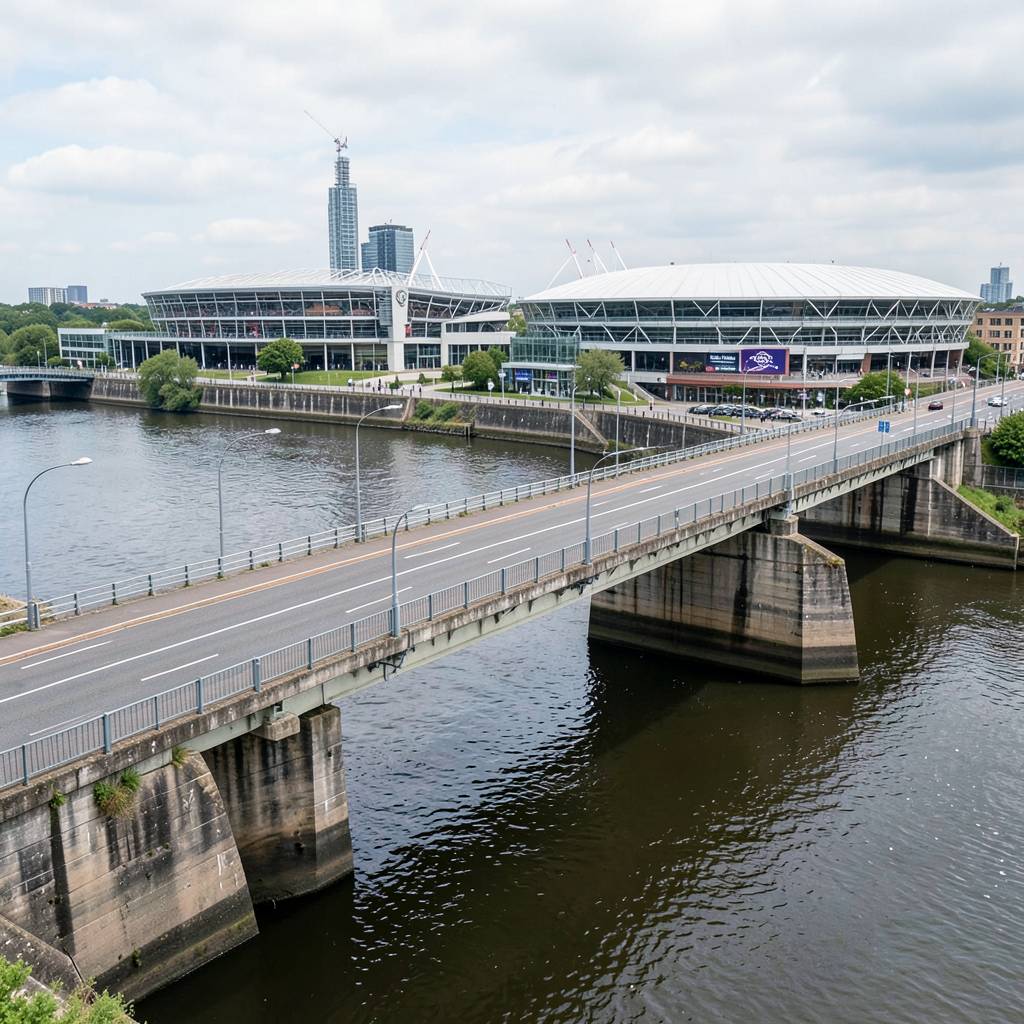

Nottingham Forest has abandoned temporary traffic restrictions during home matches after highways officials rejected the proposals over safety and congestion issues.
Two lanes on Trent Bridge could be sealed off permanently as part of the club’s ambitious expansion of its riverside stadium.
The East Midlands club first shared plans to enlarge the City Ground beside the River Trent in 2019, securing approval in summer 2025 before announcing more expansive proposals that December.
Under owner Evangelos Marinakis’s blueprint, the revamped Peter Taylor Stand would soar to 58 metres, with overall capacity potentially rising from 30,000 to 52,500 spectators, though initial work would target 45,000.
To facilitate the long-anticipated development, the Premier League club now wants to shut two lanes on Trent Bridge permanently to ensure the anticipated larger matchday crowds can move safely.
The club had originally suggested trialling matchday lane closures, but highways authorities rejected these citing safety and traffic concerns.
Planning documents filed with Rushcliffe Borough Council detailed how existing matchdays currently see unmanaged conflict on Trent Bridge, with large groups of supporters spilling onto the A60 en route to the City Ground.
The club’s designs call for closing one lane on each side of the bridge, creating space for the additional spectators expected to use the crossing.
A transport assessment by planning consultants stated the design involves appropriate tapering and lane reductions on approaches to narrow the road by one lane, which could then accommodate pedestrian movements. Supporters would access the protected lane via Trentside North, the tunnel beneath Trent Bridge, and the pedestrian crossing on London Road.
The assessment noted this arrangement would enable removal of the current concrete security barriers on the bridge, installed to shield fans from potential terrorist threats but widely viewed as unattractive. These could potentially be swapped for bollards resembling those on Westminster Bridge in London.
The club’s planning agents observed that despite differences in local conditions between the two bridges, Trent Bridge could become a landmark demonstration of each council’s commitment to promoting active travel.
City councillor and Forest supporter Steve Battlemuch, who has long advocated removing the grey barriers, expressed he would be delighted to see them exchanged. He explained he had followed Nottingham Forest across Europe the previous season and visited various cities where they crossed bridges without such substantial barriers. The prospect of overall improvements to the stadium and surrounding areas would provide opportunities to enhance Trent Bridge. He suggested there was merit in completely reconsidering the bridge’s design.
Cllr Battlemuch argued that beyond repairing cracked pavement, efforts should focus on making the bridge more appealing. He proposed introducing features such as a walk of fame, stating the area required more creativity to draw visitors and would enhance the experience of crossing Trent Bridge.
The club’s transport assessment, submitted alongside the City Ground plans, indicated the underpass would offer supporters a vehicle-free route to the expanded stadium. Nottingham Forest has also suggested an event shuttle service connecting the ground with Queens Drive Park & Ride.