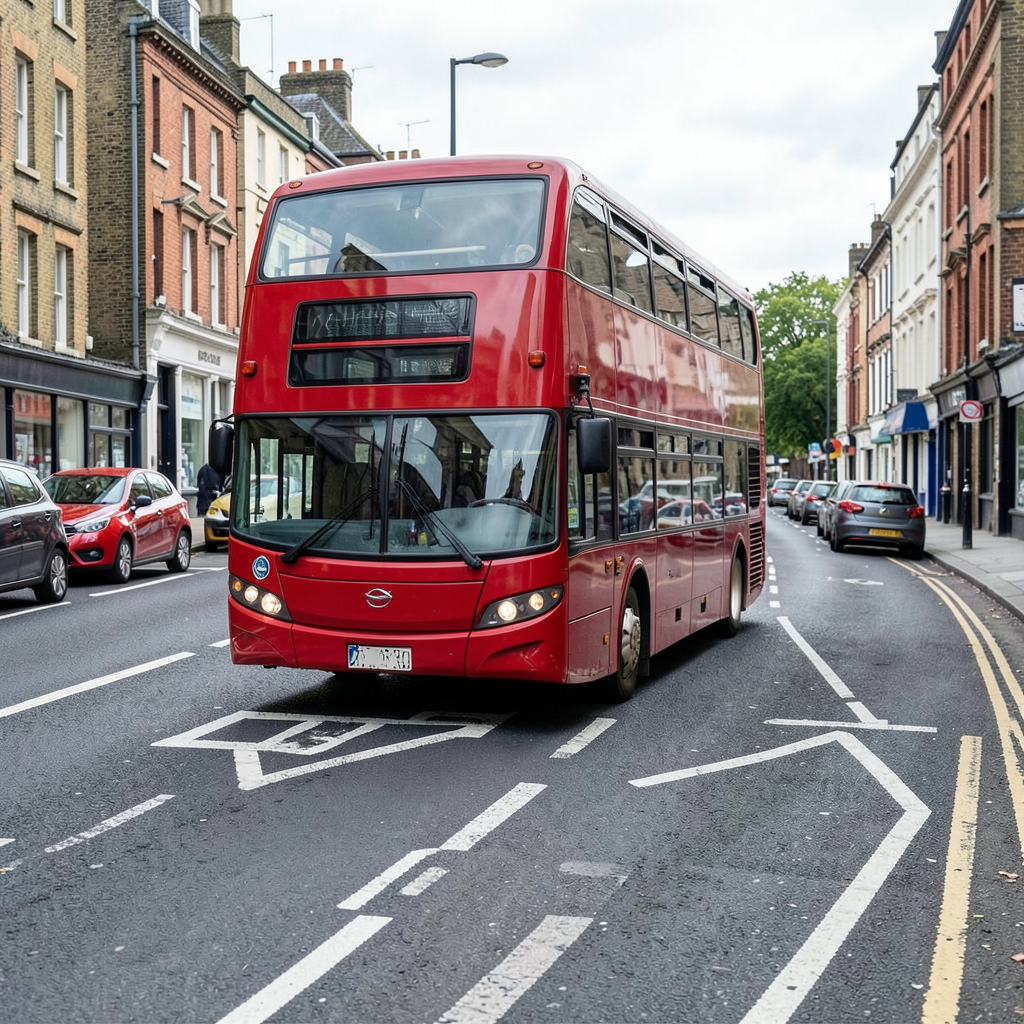

Nottingham’s local authority is assessing the current hours of operation for bus lanes throughout the city as part of efforts to establish a more uniform system that road users can readily comprehend.
At present, the times during which these lanes operate differ substantially depending on the specific location.
The assessment seeks to streamline these varying arrangements by implementing a standardised approach to operating hours wherever road conditions permit.
The initiative aims to clarify restrictions for drivers regarding when bus lanes are accessible, while simultaneously preserving dependable public transport services and the efficient movement of vehicles.
The suggested modifications intend to standardise the city’s bus lane framework through three defined operational windows: a peak-hour window designed for routes experiencing congestion solely during morning and evening commuter periods, an extended daytime window suitable for zones with continuous bus frequency throughout the day or where traffic congestion extends beyond typical peak periods, and a continuous 24-hour window for critical arterial routes serving the city, corridors with services running throughout night and early morning hours, areas experiencing significant lane misuse outside rush periods, and where adjacent or connected routes operate on identical schedules to prevent driver confusion.
This approach will simplify restrictions by synchronising operating times across continuous routes, promoting smoother traffic movement.
The strategy also supports maintaining dependable and efficient bus services while better addressing the requirements of local residents, commercial enterprises, and visitors.
Initial modifications will target major corridors as shown on the accompanying plan.
A formal public feedback period is scheduled for the latter part of 2026.
The council also intends to improve accessibility features by expanding bus stop waiting areas in neighbourhood zones, prioritising safe passenger boarding and exiting.
The elected member responsible for transport, growth and regional development stated that the objective involves creating a road network functioning as clearly and effectively as possible for all users, with the review of operating times and movement toward greater consistency intended to make restrictions simpler to comprehend while continuing to support public transport and the efficient flow of traffic throughout the city.
The regional leader noted that residents depend on transportation systems that are straightforward, dependable, and adaptable to real-world conditions.
The investment would modernise Nottingham’s transport network, rendering journeys into and around the city clearer and simpler for drivers while supporting broader efforts to reduce congestion and maintain movement across the East Midlands.
By endorsing practical improvements of this nature, the region is contributing to developing a transportation system prepared for future requirements and better linked for the people, businesses and communities it serves.