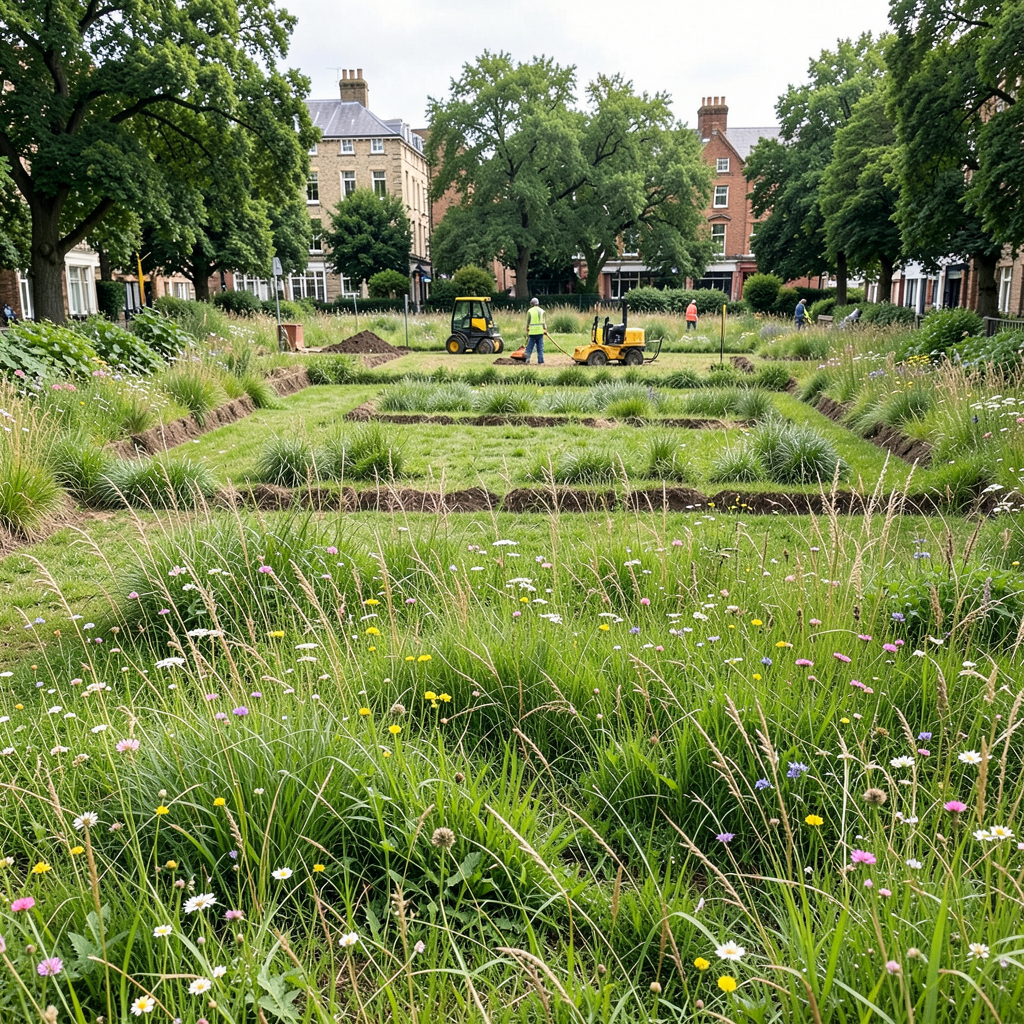

The award-winning Green Heart in the city centre will undergo its annual maintenance programme next week.
The procedure, known as a cut-and-lift, involves trimming back vegetation that has grown throughout the summer months.
Once complete, the appearance of the site will change considerably, though this transformation is necessary for the long-term wellbeing of the meadow.
This type of maintenance is standard practice across the council’s parks and open spaces.
The annual cutting occurs at the conclusion of the growing season and follows established principles for managing grassland habitats.
The process replicates the effects of traditional autumn grazing, which historically helped maintain ecological balance within meadow environments.
Far from damaging the vegetation, this approach actively supports biodiversity over time.
Wildflower meadows require nutrient-poor soil conditions to flourish.
Allowing plant material to decay naturally over winter would increase nutrient levels in the ground.
Higher nutrient concentrations favour grass growth, which subsequently outcompetes wildflower species.
This shift reduces both the ecological diversity and the aesthetic quality of the meadow.
By removing plant material through the cut-and-lift method, soil nutrient levels remain appropriately low.
This creates optimal conditions for wildflowers to develop the following year.
In situations where grass species become overly dominant, an additional summer hay cut might be implemented to eliminate grass seeds before they scatter.
Such supplementary treatment is not required at the Green Heart at present.
The removal of vegetation serves ecological rather than cosmetic purposes.
The process mirrors natural seasonal cycles that meadows have developed alongside over extended periods.
These cycles sustain diverse communities of flowers and grasses while providing habitat for pollinators, small mammals, and avian species.
Following cutting, the meadow may appear sparse, but this condition is temporary and integral to the natural rhythm of grassland ecosystems.
The intervention ensures wildflower populations return more robustly each spring and guarantees the continued variety and colouration of the site throughout the year.