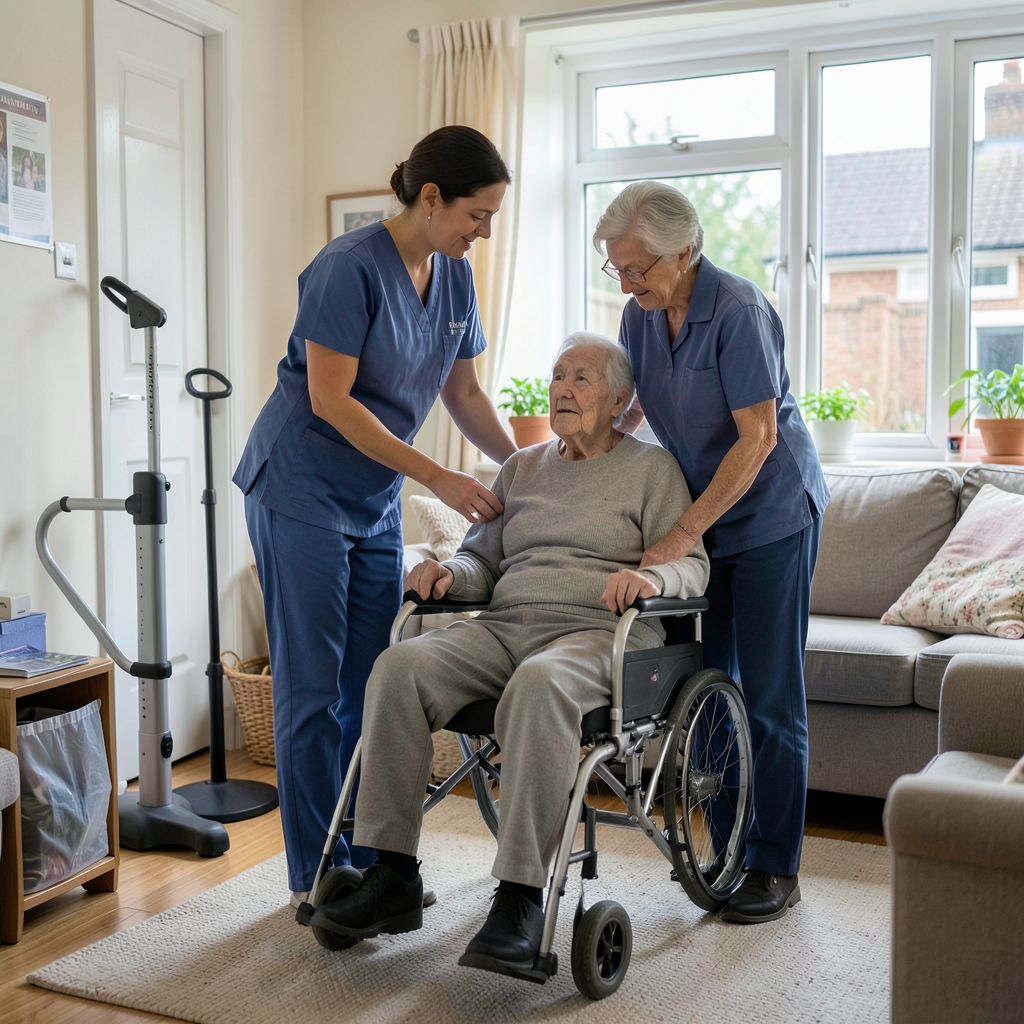

A financial commitment of £343,000 has been given the green light by Nottingham City Council to fund an expanded Intermediate Care Offer scheme.
The allocation represents a portion of a broader £20 million initiative designed to enhance services and projects throughout the city, drawing from a single-year budget surplus identified in the 2025/26 financial period.
The funding will establish a comprehensive, citywide approach to intermediate care that integrates preventative measures, rehabilitation support and community-based assistance.
This strategy aims to enable Nottingham residents to sustain their independence and decrease the likelihood of requiring unnecessary hospital admission or long-term institutional care.
Central to the programme is a Home First philosophy, acknowledging that individuals typically experience improved recovery outcomes when supported within their own residences and local communities.
By uniting healthcare providers, social care professionals and community organisations, the enhanced model will deliver coordinated short-term interventions focused on restoring functional abilities, preventing health decline and facilitating smooth transitions from hospital settings.
The scheme incorporates specific provisions including transition assistance for those leaving hospital, community resilience programmes and tailored respite options for family caregivers through the Shared Lives initiative.
Proactive support will also be extended to individuals identified as being at risk of physical deconditioning.
Councillor Helen Kalsi, who holds the adult social care and health portfolio at the council, indicated that enabling residents to maintain independence for as long as possible represents a fundamental priority.
The investment forms part of a substantial £20 million package of additional funding being deployed across Nottingham, with the £343,000 allocation specifically designated to strengthen recovery support for individuals managing illness or injury and help them regain the confidence to remain safely at home.
The approach seeks to develop a more interconnected system capable of addressing emerging needs before they escalate, thereby alleviating strain on acute medical facilities and residential care providers while improving outcomes for those receiving support and their informal caregivers.
The initiative will build upon existing community resources and established local services, establishing a more efficient and cohesive framework that avoids unnecessary duplication of efforts.
As the programme develops, Nottingham residents, caregivers and healthcare collaborators can anticipate enhanced quality of life, increased self-sufficiency and decreased demand for statutory service intervention.