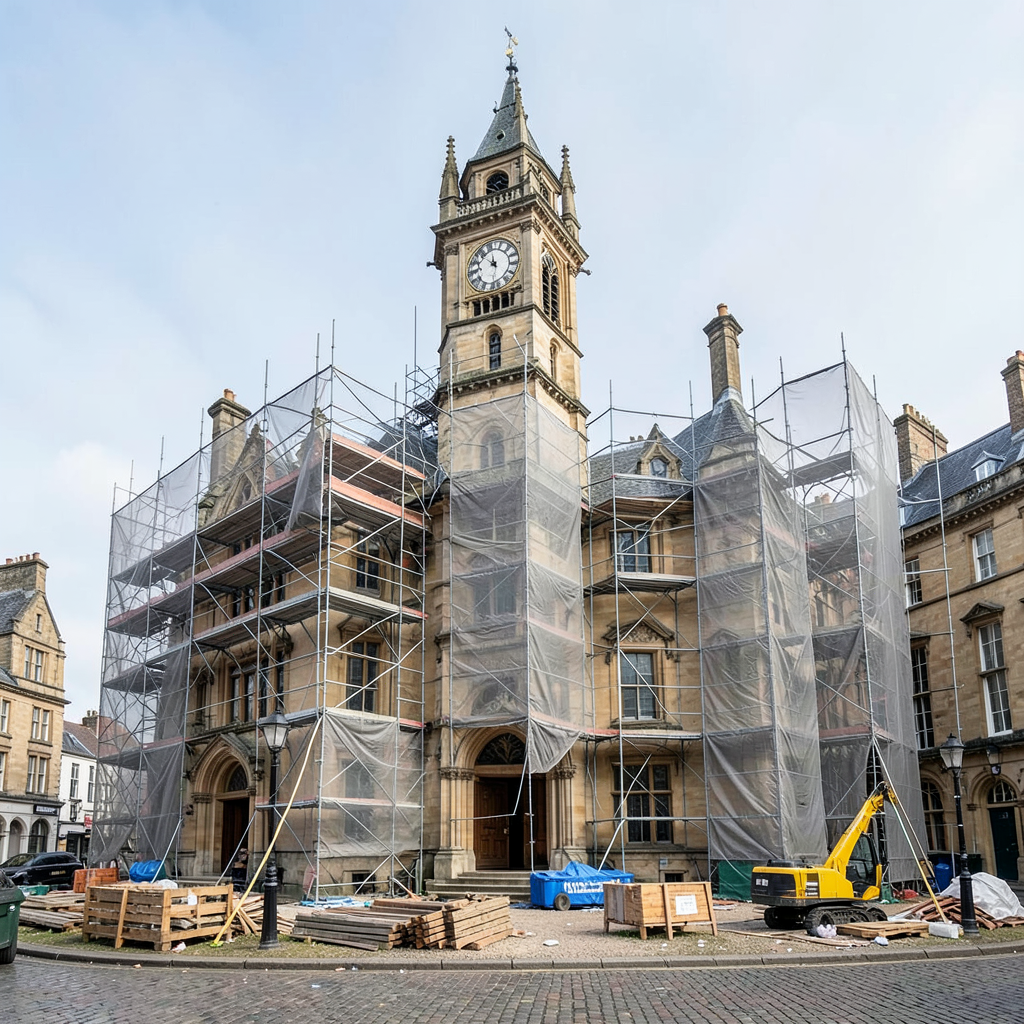

A major restoration project for Nottingham’s landmark civic building has received unanimous backing from elected officials.
The Executive Board sanctioned £11.6 million in funding on 20 October for comprehensive improvements to the historic Council House, marking one of the most significant investments in the city’s architectural heritage in recent decades.
The allocation forms part of a broader £19 million initiative designed to rejuvenate Nottingham while addressing critical maintenance needs across the authority’s property portfolio.
Planned works encompass roof renovations, stone facade restoration, and security upgrades both inside and outside the structure.
Having served as the focal point of municipal activity since its formal opening nearly a century ago, the building requires substantial intervention to ensure its continued presence for residents of future generations.
Simultaneously, proposals have emerged to revamp the adjacent principal public plaza.
The £3.5 million reimagining of Old Market Square would introduce additional vegetation, tree planting, and a fountain feature, transforming the area surrounding the Council House into a more attractive urban space.
These twin developments align with the strategic objectives of the Nottingham Vision initiative, which seeks to establish a more sustainable and inviting metropolitan centre.
The Council House allocation constitutes the first phase of a rolling three-year maintenance strategy targeting the most pressing structural concerns across the authority’s operational properties.
Beyond this flagship location, the programme will extend to roof refurbishment at Loxley House alongside improvements at other council-owned facilities.
Work will be sequenced based on vulnerability assessments and time-sensitivity.
Adopting such a methodical approach to building conservation should mitigate ongoing wear, forestall more costly interventions further down the line, and minimise interruptions to essential council operations.
Councillor Jay Hayes, holding the Housing and Planning portfolio, commented that the investment would shield a distinctive local landmark while complementing the regeneration of the city’s primary public gathering space.
The combined effort, Hayes explained, reflected an overarching goal of constructing a city centre that inhabitants could appreciate and enjoy for years to come.