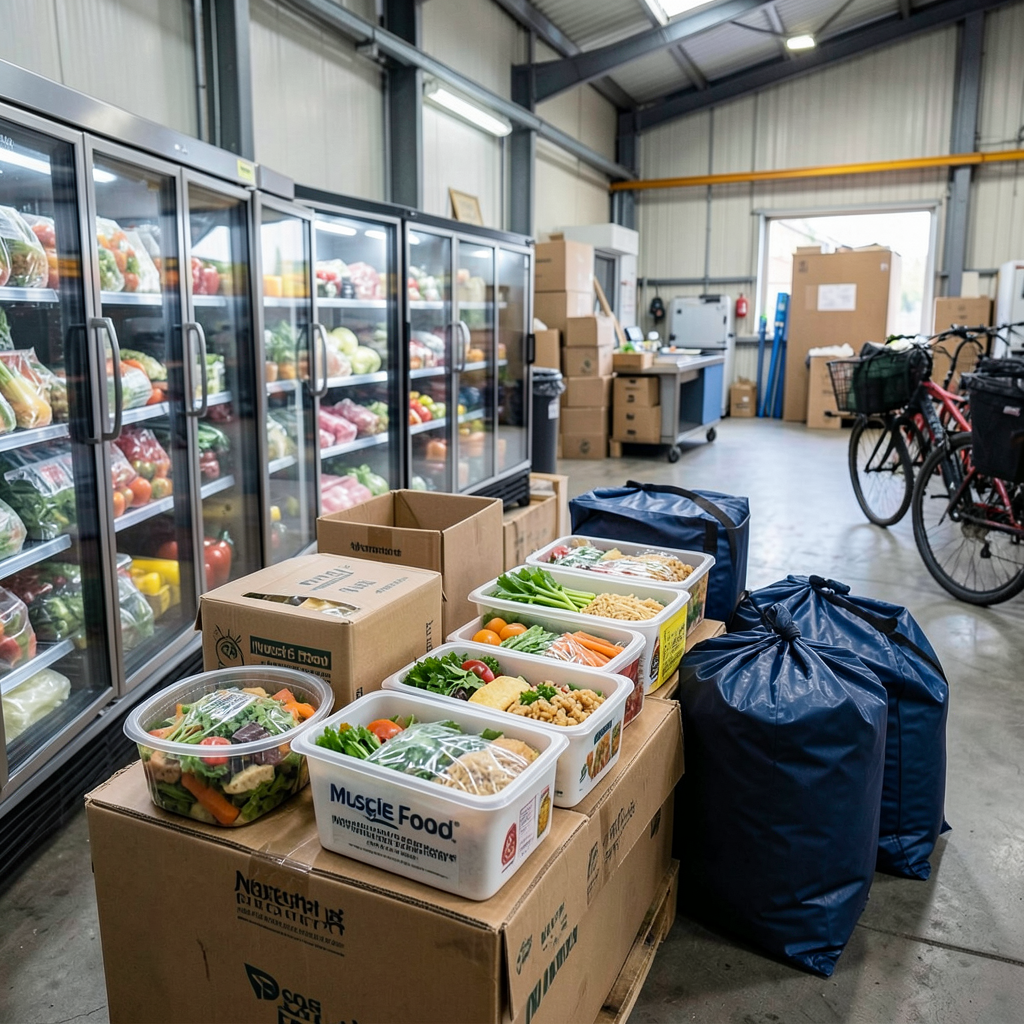

Muscle Food, a Nottingham-based healthy food delivery business, has entered administration after financial difficulties and a series of complaints about customer orders.
The company, which operates from Park Lane Business Centre in Basford, appointed joint administrators on July 21 following an application made by lender Bizcap.
A notice published on the Muscle Food website identified Stuart Kelly and Claire Harsley as the joint administrators of Muscle Foods Limited, which entered administration on July 21, 2026.
The administrators said they were responsible for managing the company’s affairs, operations and assets as agents and without personal liability.
Founded in 2013, Muscle Food distributes meals and was valued at £50 million four years after its establishment.
The business was subsequently affected by the Covid pandemic, Russia’s invasion of Ukraine and rising inflation, as well as complaints about deliveries.
Reviews on Trustpilot mentioned absent orders, meat described as rancid or producing a bad smell, and difficulties with customer service.
Former chief executive Nick Preston said the situation had affected the company, its suppliers and customers.
He described the business as being in a precarious position following a prolonged series of damaging setbacks and said the team had overcome significant challenges.
Preston also pointed to changes in Trustpilot reviews since early May.
Muscle Food sells high-protein food and snacks.
It employed an average of 92 people during the year ending July 31, 2025, compared with 113 in the preceding year.
The Nottingham Post has asked Muscle Food’s administrators, insolvency firm Mackay Goodwin, whether redundancies have taken place.
Ownership of the Basford-based company changed in July 2025 when former chief executive Nick Preston and business partner Ross Carlin bought the business.
The new owners then implemented a restructuring programme intended to restore growth.
Companies House records show that Muscle Food recorded a profit after tax of £902,285 in 2025, following a loss of £6,834,752 in 2024.
Its directors previously said that management had begun a substantial restructuring programme and adopted a new strategic direction to stabilise and reposition the business after the acquisition.
Although the company continued to report operating losses, its directors forecast in January that it would return to profitability in 2027.
The plan included expanding revenue streams and achieving synergy savings across the wider group.
However, they identified competitive pressure, supply-chain volatility and technological developments as potential obstacles to the company’s recovery.