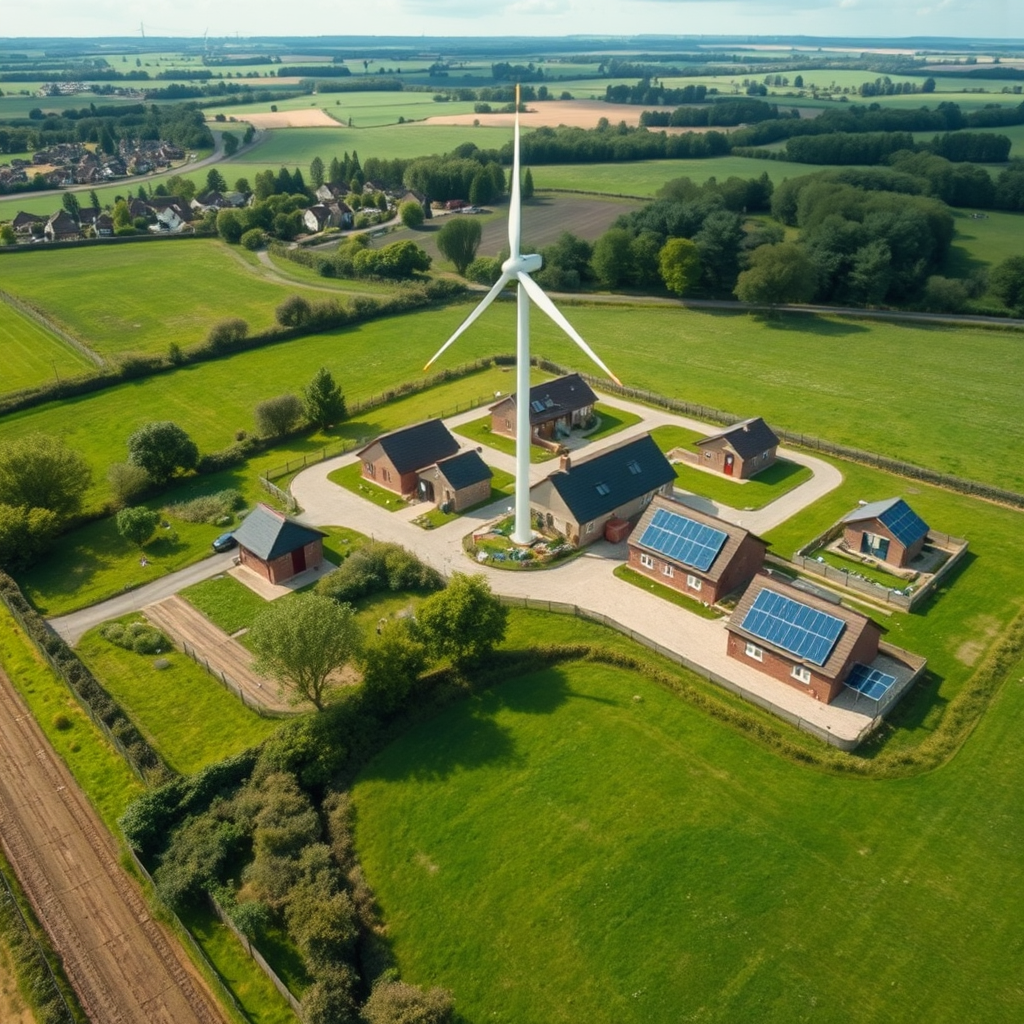
A couple save £2,000 a year living in an off-grid eco-community – but have to do 600 hours of work a year to live there. Helena Tilley, 61, and her husband, Simon, 61, live at the Hockerton Housing Project (HHP) – a self-sufficient co-housing site on the outskirts of Southwell , Nottinghamshire . Their unique four-bedroom home requires no heating and its 11-acre setting has its own wind turbine, solar power and water system. The Tilleys pay council tax and for a small amount of back-up electricity, but these costs are offset by income from surplus renewable energy they sell back to the grid. This £144 annual profit means their household bills amount to just £288 per month. Compared to an equivalent UK household, the couple estimate annual savings of £1,884. However, HHP requires each household to contribute 600 hours per year towards the upkeep of the land and the project’s not-for-profit business. The community of 16 also grows its own food to reduce its carbon footprint, harvesting 90% of its own fruit and veg during summer, and about 30% in winter. HHP’s aim is to achieve a plant-based diet, but for now residents still raise a small flock of sheep for meat and enjoy honey from beehives. The couple admitted to Waitrose trips for personal essentials, including gluten-free products. Meanwhile, another HHP family said that they manage to spend next to nothing at the supermarket in the summer, and as little as £50 on monthly shops during the winter. Helena, a paediatrician, said: “It’s a low carbon, healthy lifestyle that we’re trying to promote and it’s a very special place. “It’s an opportunity to be really close to nature and it has been an absolutely amazing and safe place to bring up children. “These houses are wonderfully designed. For us, it ticks all our boxes.” The couple have lived at HHP since its founding thirty years ago. Their 33-year-old son, Luke, recently returned to the community to live with his own family in one of the newer, but similarly designed, houses on the land. The two-bed eco homes at HHP will set you back £325,000 and the five-beds are on the market for £600,000. Residents say this is in line with the rest of the area. The eco-homes are made from materials like concrete blockwork, concrete beams, and clay tiles which help the houses to store and release heat energy over a long period of time. Energy to heat the houses comes mainly from the sun, body heat, and appliances. The homes operate with an internal temperature of 18 to 24 degrees all year round. Most of the community’s energy comes from the on-site turbine, solar or water systems, which Simon helps to maintain. Helena is semi-retired but continues to work as a paediatrician and as the lead on climate change for the Royal College of Paediatrics and Child Health. She is focused on bringing the study of environment, air pollution, and nutrition into preventative practices in healthcare. She said: “This place is my mental health place. Access to trees and clean air is so important for all of us. “Where we live, how we travel, and what we eat is so closely intertwined.” Helena spends her spare time growing cabbages and making juice from orchard apples. She’s an expert at preserving food for the winter months. Many of the jobs on the HHP rota fit around the working day, like spending 15 minutes collecting eggs from the chickens. The larger tasks that require a group effort are usually done on Sundays, but the schedule is flexible. Helena and Simon believe that the UK should be building more homes like theirs. Simon said: “It’s a crying shame that the UK has spent decades building very poor quality houses with zero consideration for climate resilience or local community. “It’s so frustrating that big building companies are just interested in making money and not building good places to live.” The couple’s hope is that their lifestyle can be “a source of education and inspiration” for everyone. Helena added: “If we create a demand for low energy homes – people saying this is what they want – then maybe the house builders will start to work on that. “I couldn’t have asked for a better place to spend the past thirty years.
Couple save £2k-a-year living in Nottinghamshire eco-community but must do 600 hours work to be there
Published on
This is a digital representation, not a photograph.