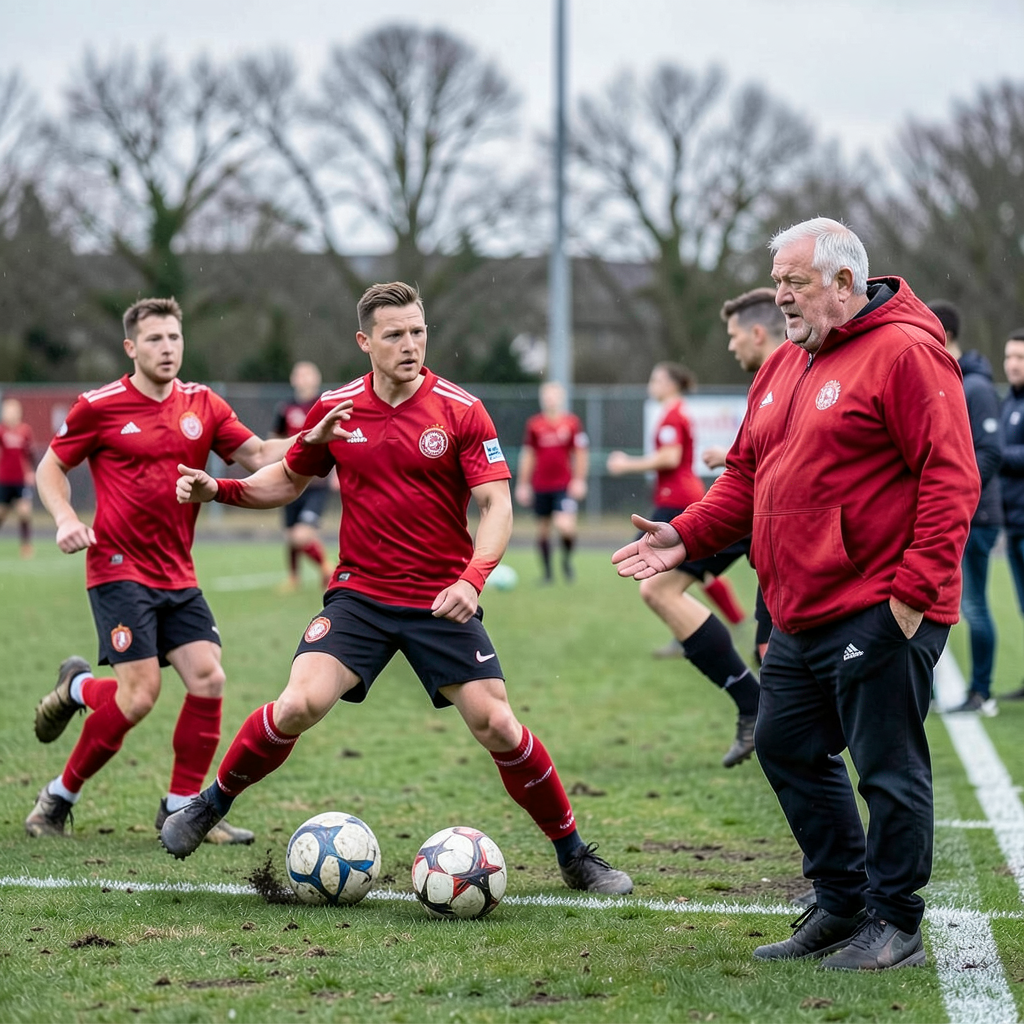

Oliver Glasner’s relatively brief tenure as Nottingham Forest head coach has already established a pattern of lengthy, forthright media appearances.
The Austrian manager has consistently given direct assessments of his side’s performances, regardless of whether the result was a victory, defeat or draw.
His press conference following Saturday’s 2-0 defeat at Bournemouth was shorter than usual, but it still provided a clear diagnosis of Forest’s current shortcomings.
Glasner believes the Reds encounter difficulty in physical, intense matches.
The issue may not be new to the club, but the 52-year-old coach has been given responsibility for addressing it.
When asked whether he possessed the personnel required to produce an improvement, Glasner indicated that additional players could be recruited if necessary.
January is only a few weeks away, although Forest have seven fixtures to play before the transfer window permits them to pursue reinforcements.
Their existing squad was not considered adequate for the demands of the Premier League because the team had lost and failed to score in each of those matches.
The manager identified defeats against Leeds United, Coventry City, Brentford and Bournemouth as examples of Forest falling short.
The weekend loss at the Vitality Stadium continued an unbeaten run for Bournemouth against Forest that now spans 13 matches.
Having seen off Manchester City shortly before the international break, Forest might have approached the south coast fixture in a positive frame of mind.
Instead, their weaknesses became apparent and highlighted the scale of the work required during the January window.
Bournemouth extended their winning sequence to nine consecutive matches across all competitions, with goals from Evanilson and Justin Kluivert.
The hosts repeatedly exposed Forest’s defensive frailty and were also more effective in front of goal.
They registered five big chances and scored twice from 19 attempts, seven of which reached the target, producing an expected-goals total of 2.89.
Forest were almost as productive in terms of the volume and quality of their attempts, registering 18 shots compared with Bournemouth’s 19.
Their xG reached 1.99, but only one effort found the target, with the attempt arriving nine minutes from the end of the match.
Nine further shots missed the target and eight were blocked, resulting in a shot-on-target rate of 5.6 per cent.
Substitutes Igor Jesus and Chris Wood both failed to convert chances from inside the six-yard box, with the opportunities valued at 0.5 xG by Opta.
Liam Delap also had an unsuccessful afternoon, recording an individual xG of 0.05 without testing the goalkeeper or having a shot blocked.
Delap had delivered two goals against Manchester City after joining Forest during the summer for £45 million.
Those performances demonstrated his potential, while a goal against Aston Villa earlier in the campaign had provided another indication of his ability.
His contribution at Bournemouth was less productive, leaving the 23-year-old forward in need of greater consistency.
The statistics underlined Delap’s difficult afternoon.
He committed three fouls, completed nine of 18 passes and lost possession 23 times from 39 touches.
His only on-target attempt was not registered, although one of his efforts was blocked.
He was also booked for a mistimed challenge.
Glasner has previously acknowledged that Delap remains relatively inexperienced in the Premier League.
Following the forward’s brace against City, there was commentary suggesting that he needed to develop a greater ability to score from close range and less tidy situations.
The head coach viewed this as a combination of instinct and instruction.
Forest have worked with Delap during weekly sessions to improve his awareness of where the ball will fall, while his movement and anticipation inside the penalty area also require attention.
Glasner believes regular participation could allow Delap to reach double figures in the Premier League.
He also maintains that further improvements could take the forward towards 20 goals because of his existing qualities.
Heading was another area identified for development, despite Delap’s height and physical attributes.
The forward has sought opportunities to practise heading after training, which Glasner said gave him confidence that Delap would continue to improve.
Forest’s substantial investment in Delap makes it unlikely that the club will abandon his development despite the difficult match against Bournemouth.
The £45 million summer signing received limited support from his teammates, however, and the circumstances suggest that another versatile attacker could be among the club’s January priorities.
Dan Ndoye has been trusted to partner Morgan Gibbs-White in the two attacking midfield roles behind the forwards.
His selection has not consistently delivered the expected return, and the Switzerland international was removed at half-time at the Vitality Stadium.
Xaver Schlager’s introduction for the second half gave Forest greater control of midfield against Bournemouth.
Midfield and wing-back are also possible areas for reinforcement during the winter window.
Saturday’s principal statistical difference between the teams, though, was the contrast in their performance inside the penalty areas.
Bournemouth recorded 22 touches in the box compared with Forest’s 23, meaning that the visitors entered the scoring area almost as often as their hosts.
Bournemouth’s front three of Evanilson, Kluivert and Rayan compelled Matz Sels to make five saves and converted two big chances.
Forest’s attackers were unable to capitalise on an xG of close to two.
It was the second match this season in which the Reds had failed to register a shot on target during the opening hour of a Premier League contest.
Their overall xGF for the campaign stood at 17.4, although only nine goals had been scored.
That difference illustrates the gap between the chances Forest have created and the number they have converted.
Chance creation has generally not been the principal problem for the squad; the difficulty has been turning enough opportunities into goals.
Glasner declined an opportunity to strengthen the squad further before the summer window closed.
Some potential targets had eluded the club, but the manager did not want signings to be made simply for the sake of adding bodies.
He placed importance on conducting proper assessments of possible recruits and evaluating the abilities of the players already available.
Several months into his tenure, Glasner may have a clearer outline of the changes required when the January window opens.
His immediate assessment is that Forest’s physical demands in the Premier League are exposing the squad’s limitations, while the existing group has also been unable to match the finishing output of its underlying chances.