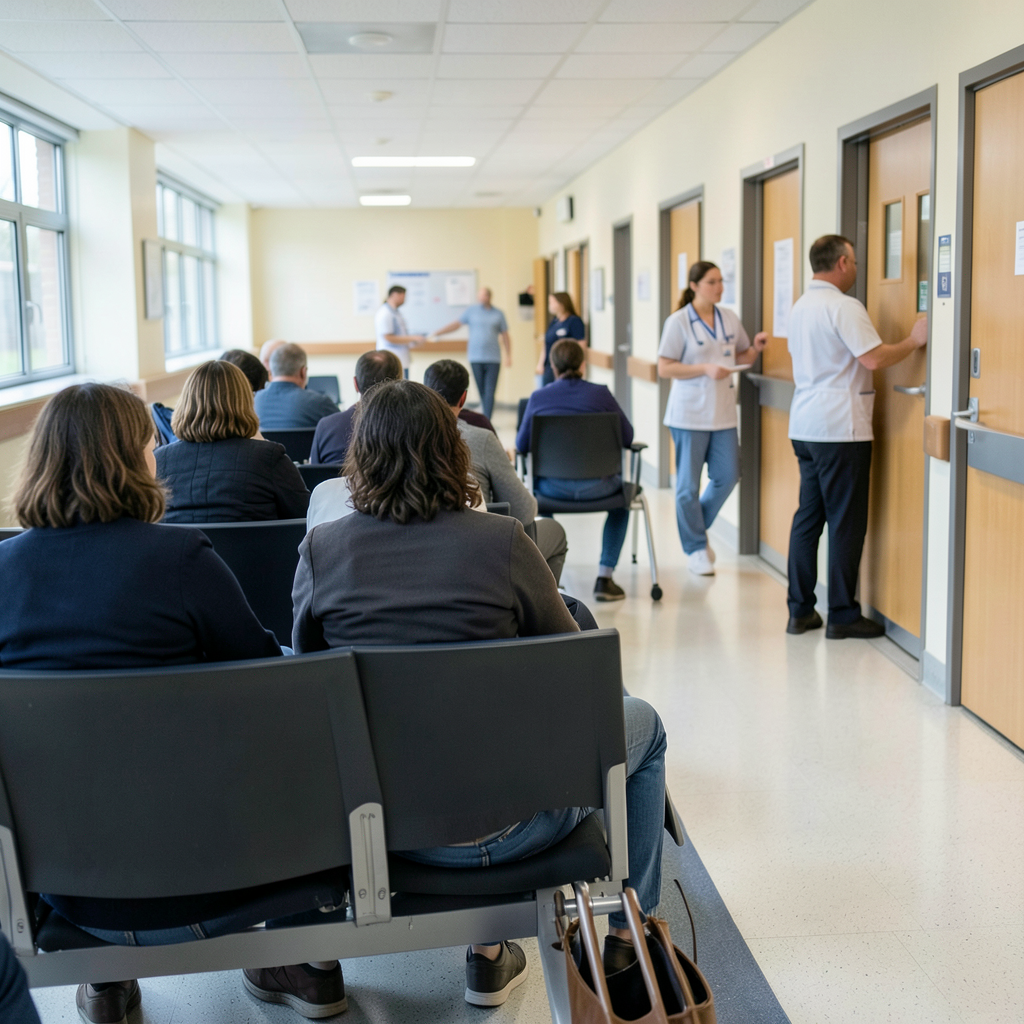

Nearly 190 patients remained in the emergency department at Nottingham’s Queen’s Medical Centre after Nottingham University Hospitals NHS Trust declared a critical incident.
The trust said services across Nottinghamshire were under continuing pressure following the declaration late on Monday, November 23.
A critical incident is declared when an NHS trust can no longer provide services to its usual standard.
NUH attributed the latest declaration to increased numbers of flu and COVID cases.
In an update on Tuesday morning, November 24, the trust confirmed that it remained in a critical incident, with almost 190 patients still waiting for treatment in the emergency department.
Overnight, staff had worked to discharge patients and arrange safe journeys home, but significant numbers remained awaiting beds amid sustained pressure across the Nottinghamshire healthcare system.
People were advised to receive a flu vaccination and remain at home if they felt unwell.
Those attending an emergency department were told to do so only for serious accidents or life-threatening emergencies.
NUH reported that flu cases across its hospitals had increased from 14 to 60 during the preceding week, while COVID cases had risen from 53 to 73.
Almost 100 patients were waiting for ward beds, and the trust had no available capacity in resuscitation or major trauma services.
The trust previously entered a critical incident on October 20 because of record-breaking A&E attendances.
That incident ended the following day.
Andrew Hall, the trust’s chief operating officer, said the rise in flu and COVID cases had added to existing pressures, particularly in the emergency department.
He said flu levels had exceeded predictions for the same point in the year and stood above figures recorded at the equivalent time in the previous year.
Large numbers of patients were waiting to be seen and for ward beds, creating an increased risk of harm, Hall said.
Staff were responding by creating additional space, arranging extra shifts, identifying opportunities for safe discharge and working with partner organisations to improve patient flow.
The trust also asked relatives to collect family members from hospital as soon as possible once they were medically ready to return home, helping free beds for patients needing urgent care.