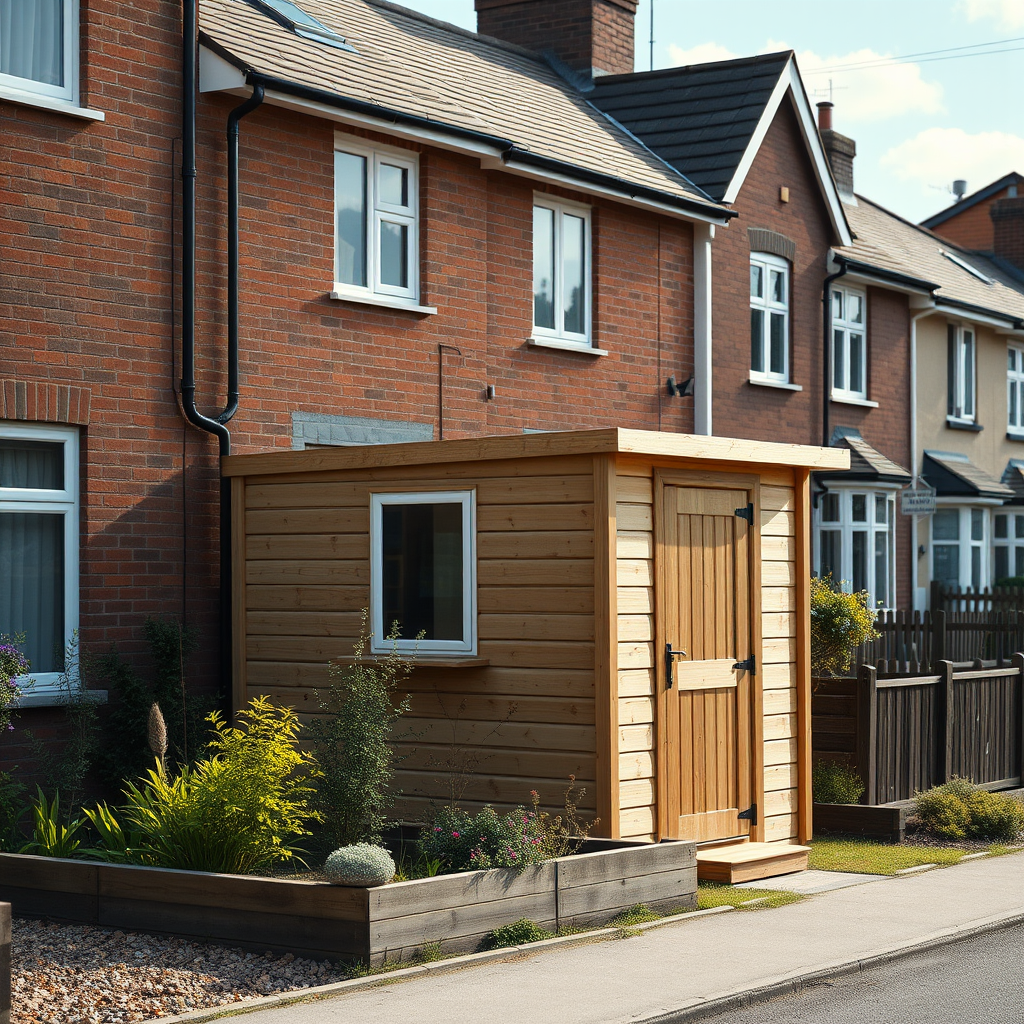

A teenage businesswoman from Nottinghamshire fears she may be forced to demolish her nail salon after council planning officials raised objections to what her mother describes as a premium-quality outbuilding. Felicity Etheridge has become embroiled in an unforeseen disagreement with local authorities following objections to the modest beauty studio she erected next to her mother’s house on Lilac Crescent in Beeston.
Convinced that consent was unnecessary for the simple structure, Felicity and her 44-year-old mother Kelly Batley were taken aback to discover this was not the case because the salon’s roof protruded slightly beyond their home’s bay window feature.
Felicity noted that the only technicality officials identified was that overhang, and without it they would have had no grounds to demand an application. She established her enterprise in October.
Having spent around £700 on the planning submission, the duo remained optimistic that approval would be given for the temporary building. However, Broxtowe Borough Council turned down the request on March 26, with a planning official concluding that the salon’s appearance, positioning and construction materials were excessively conspicuous given its location on the corner plot. The official also observed that the structure resulted in inadequate garden space.
Felicity remarked that the refusal came out of nowhere because things had seemed so positive. She assumed they had made a minor error and were rectifying it, and everything would work out. Then it was like wondering what on earth had happened.
Ms Batley reported that her partner had questioned a planning official about any obvious problems that might cause rejection, and apparently the officer gave a negative response.
The mother noted that all the locals walked past commenting on how attractive it looked, and people were saying how wonderful it was to have something like this in the area.
She maintained that council officials told her the salon was shoddily built and that nearby homes were all red brick, which she contested, noting they were prepared to improve the unfinished external cladding.
The mother and daughter voiced exasperation over what they described as inadequate communication after the refusal, explaining they were ready to modify the salon’s look and dismantle it after several years.
Felicity observed concerning the council’s worry about visibility that the only distinction with them was that they were on a corner plot. She highlighted that numerous residents installed comparable additions during the pandemic.
Addressing the council’s concern about insufficient outdoor area, she stated she would fully appreciate this if it were a council property, if they were tenants, but her parents own this house.
Felicity’s dedication to her trade began when she was 14. Four years subsequently, she founded her own company after discovering it difficult to operate in other establishments due to her ADHD and Autism.
She explained that she had devoted four years of her youth constructing this from nothing and had achieved an income she could support herself on. She noted that for half a year she received no wages to fund this. She began paying herself in January this year, and now she has had to cease again because of the legal expenses.
She noted her mental wellbeing would be completely crushed if she had to pull down her business premises and go back to employment at someone else’s salon.
Felicity is considering whether to file another planning application or challenge the decision, and has set up a crowdfunding effort to finance the dispute. However, she worries she might have to pay the council’s expenses should the Government’s Planning Inspectorate side with them during an appeal.
She warned that this would mean she has no future and no enterprise.
A representative for Broxtowe Borough Council indicated that the young business proprietor’s personal situation was not relevant to planning decisions, which is why the request was denied.
The council official explained that the planning department assesses all applications against established planning policy, and this location was refused permission based on appearance and residential quality. The official stated that the council must recognise that while occupants may change, the structure persists for its lifespan. The official noted that applicants’ personal situations are not a material planning consideration and consequently the development was turned down. The official added that the applicant can challenge the decision and has been advised of available options.